
A souvenir – “a thing that is kept as a reminder of a person, place or event”
These souvenirs collected over the years are not described in any chronological order as they evoke different memories – in some vivid very pleasant recollections of a person or event, in other cases the association is long forgotten and, frankly, in some the souvenir was so ghastly I just couldn’t resist adding them to my shelf to shock relatives observers of my shelves.

Contemplating the hundreds of souvenirs on the shelves in my study both in Bardsey and in the last ten years in Radcliffe-on-Trent, I reflected on the thousands of memories – mostly pleasant – that these objects recall. So I decided to take a few of these souvenirs and write a few words about the events which occurred around the time of their acquisition.
LIST OF CONTENTS
– MALTA CIGARETTE LIGHTER
– NODDY – A PRIVATE PRACTICE COMPANION
– TWO THRIFY BEARS FROM HAMBURG
– BLUE RIDGE MOUNTAIN BEAR
– NUNZILLA FROM NAPPA VALLEY
– SWISS COW LIGHTER FROM BASLE
– ANNA’S ‘BOSS GERM’ BADGE
– CUFF LINKS FROM MECCA
– TWO ROLEX WATCHES FROM MALTA
– REPLICA OF SNOWDEN TRIANGULATION STATION
– BALL POINT FROM INVERCARGILL – NEW ZEALAND
– HARRY RAMSDEN’S FISH AND CHIPS VAN
– SALT FROM LUNEBURG – GERMANY
– A CANDELABRA FROM PARENTS
– THE CUTTY SARK MODEL
– THE ROSSI MEDAL OF THR EUROPEAN CF SOCIETY
– AN ARTICLE IN POLISH
– KENTUCKY FRIED CHICKEN
– LAMBANANA
– FOSSIL FROM TUBINGEN FOREST
– A CRETEAN WINDMILL
– A LITTLE MERMAID
– A DECANTER FROM THE `NORTHERN CF CLUB’
– MANSION HOUSE BANQUET WITH HRH PRINCESS ALEXANDRA
– SAMUEL GEE COELIAC SYMPOSIUM MUG
– A MALTA CIGARETTE LIGHTER

One of the oldest souvenirs from the Fifties is Corporal Vella’s gift of a souvenir cigarette lighter at the end of my time in Malta with the Royal Army Medical Corps (RAMC) from 1957-1959.
When I left Malta in 1959 after two years National Service as a doctor in the Royal Army Medical Corps, Corporal Vella of the Royal Malta Artillery, presented me with a small souvenir cigarette lighter as a memory of my time in Malta. Corporal Vella was in charge of St Patrick’s Medical Centre for which I was responsible and where I worked for my time in the island.
Looking back I believe this was one the first of the hundreds of souvenirs that adorned the shelves in my study in Bardsey and since 2016 in Radcliffe on Trent. Since 1959, when I was given this lighter by Corporal Vella, Ann and I have travelled quite extensively both on holidays and as part of my cystic fibrosis work. So I have acquired many shelves full of souvenirs – not always in the best of taste I would add!

My work in Malta was essentially as a families medical officer for the UK service families and the families of the Royal Malta Artillery troops most of whom had very large families. In my clinic at the St Patrick’s medical centre I also saw many of the wives of the marines of 40 Commandos and 3 HQ Commandos who were based nearby in St Patrick’s barracks or rented property. I worked in one half of St Patrick’s Medical Centre, the other half was used by the Royal Navy doctor (Lieutenant Commander Guy Bradford).
The commando medical set up was under the direction of Petty Officer Knobs. My half of the centre was organised by Corporal Vella and Gunner Camilleri – regular soldiers of the Royal Malta Artillery. Corporal Vella and I worked together and had a very good working relationship for the 2 years I was in Malta.


There were naval nursing sisters attached who were excellent. Queen Alexandra’s Royal Naval Nursing Service (QARNNS) is the nursing branch of the British Royal Navy. The Service unit works alongside the Royal Navy Medical Branch. They took the wives’ and family clinics with me and also did home visits. We would have a clinic daily after which I would do visits with my Maltese driver in the Land Rover to English or Maltese military families anywhere on the island. After 2 years of this work I knew most of the towns and villages and their streets on the island – in fact, sometimes I had to direct the drivers to a particular street in the smaller less visited villages!

Our hospital support was provided by the Royal Naval Hospital, Imtafa in the north of the island where there were a full range of RAMC consultants.
On 1 March 1951, the designation of the hospital had changed to The David Bruce Military Hospital, after the discoverer of the root cause of brucellosis in 1887 (later traced to goats’ milk in 1905 by Sir Themistocles Zammit).
I had very little contact with the hospital except for occasional cocktail parties and professional contact regarding patients whom I had referred there. However, the staff were always very helpful with regard to giving a specialist opinion or arranging an admission. I recall receiving great support from the army consultant physician for a colonel’s wife who had the most terrible asthma, for which she was eventually invalided home to the UK.
Corporal Vella was a bustling, efficient nervous man who smoked numerous Flag cigarettes. He also smelt heavily of garlic in the mornings! He had a large family – 10 children – whom I visited when they all developed flu during the 1957 influenza epidemic. He was a regular soldier in the Royal Malta Artillery but essentially functioned as the full time manager of the St Patrick’s Medical Centre. It was very similar to a family doctor’s surgery but without old people. Sadly I have no photos of Corporal Vella.
When Lt-Cmdr Guy Bradford was off on exercises with the commandos (as occurred frequently), I would do his clinics and see the Marines with the help the Petty Officer. This was useful on occasion when there were problems outside my limited experience. For example, one morning I was standing in for Guy Bradford doing the Marines sick parade. A young soldier came in complaining of some irritation “down below”. I had a look and suggested there could be some allergic problem. The Petty Officer learned over whispered in my ear “If you look carefully Sir I think you’ll see that allergy is moving” I did – and it was. There were numerous crab lice causing the man’s itching. The PO ordered him to “Report back here with your razor and clean clothes for treatment”. So I had much to learn about the problems of soldiers which I had not encountered in my preregistration house jobs in paediatrics and thoracic surgery!
I deal in more detail with my time in Malta in “1957-1959 Royal Army Medical Corps” section of this website.
– NODDY – A PRIVATE PRACTICE COMPANION

We acquired Noddy in the late Sixties for our own children and around the time I became a National Health Service consultant paediatrician. From 1968 we did private practice for one afternoon a week and Noddy seems to have been involved from the early years. My wife Ann, a trained nurse, would organise the clinics, very efficiently weigh and measure the children, perform respiratory function tests, test the urine specimens and set up a slide specimen for microscopy. To occupy the children she would also bring a few toys and books which from the early days included Noddy
Enid Blyton’s Noddy, about a little wooden boy from Toyland, first appeared in the Sunday Graphic on 5 June 1949, and in November that year Noddy Goes to Toyland, the first of at least two dozen books in the series, was published. The idea was conceived by one of Blyton’s publishers, Sampson, Low, Marston and Company, who in 1949 arranged a meeting between Blyton and the Dutch illustrator Harmsen van der Beek. Despite having to communicate via an interpreter, he provided some initial sketches of how Toyland and its characters would be represented. Four days after the meeting Blyton sent the text of the first two Noddy books to her publisher, to be forwarded to van der Beek. The Noddy books became one of her most successful and best-known series, and were hugely popular in the 1950s.

The history of Enid Blyton’s Noddy books over the years is fascinating. From around 1950 onwards her work was treated more critically, especially the ‘Noddy’ series, and faced accusations of being elitist, sexist and racist and the books were banned from public libraries! Nevertheless she is the fourth most translated writer behind William Shakespeare, Agatha Christie and Jules Verne. There is a very interesting and very long account on Wikipedia. The controversy remains active as recently the Royal Mint refused to put Enid Blyton’s face on a Commemorative coin after being known to be a “racist”, “sexist” and “homophobe” according to the Royal Mint Advisory Committee.

Despite all the controversy Noddy came with us in our various private clinic locations from 20 Clarendon Road, in Leeds, then to the Nuffield Hospital in Horsforth and finally at the Spire Hospital in Roundhay, Leeds.
He used to stand proudly on my desk welcoming the young patients and their parents who usually noticed him when they entered the room. When he was squeezed he used to squeak. Over the years this was increasingly distracting so we removed his squeaker. One jovial parent, whose child came periodically for follow up, was in the habit of giving Noddy a squeeze when he came into the consulting room with his wife and child. On the occasion when there was no squeak he was obviously surprised, roared with laughter and asked what operation he has had!!
– TWO THRIFTY PIGS FROM HAMBURG

In June 2011 Ann and I attended the 11th EUropean Cystic Fibrosis Meeting in Hamburg. The weather was good and we had plenty of time for sightseeing, shopping and meeting with friends.
Hamburg is a major port in northern Germany and is connected to the North Sea by the Elbe River. Near the centre is the impressive Inner Alster Lake dotted with boats and surrounded by cafes


While strolling around the city we entered a long street market where I spotted a small antique pig money box which I could not resist for my souvenir shelf so I bought it – not sure for how much but it was not expensive. On another stall at the other far end of the street market there was a larger more impressive pig money box I couldn’t resist and so made a second purchase!
Smaller Pig. An identical pig is described in a recent (2019) catalogue as “Smaller pig Vintage Cast Iron Brass Pig Coin Piggy Bank 4.5” Condition: Used “Good” Price: US $148.75 (Approximately £107.53)
Larger Pig. An identical larger pig is described on the internet as The Antique The Wise Pig Thrifty Cast Iron Original Painted Piggy Bank Price $35 There is additional text as follows –
“Wise Pig has been making saving pennies adorable since the 1930s! And he looks really good for being 90. The original peachy cream and pink paint has been worn away in some areas (not so on our pig), but gives it a sophisticated timeliness. Antique piggy pig banks should be cherished like the works of art they are. Perch this cast iron cutie in a kitchen or den to add an element of playful charm!”
The message the larger pig is holding reads “The Wise Pig: Save a penny yesterday, Another save today, Tomorrow save another, To keep the wolf away.” On dangle plaque. Marked “Thrifty” on base. Size: 6.75” height; 2.75” width; 2.75” depth
I don’t remember what I paid for these but it was not much – I was surprised to see the price of the smaller one in a recent internet catalogue.

These two pigs bring back pleasant memories of our stay in Hamburg.
We had never seen a “BierBike.de” before – cheerful young men all peddling and drinking beer on a “BierBike.de” at a stag party
The only sad incident was Ann had her purse stolen when crossing the road in a crowd of bustling tourists. She had just finished paying in a cafe and her purse was against her side but not fully zipped up.
NUNZILLA

In 2000 with Ann I visited San Francisco. I had a meeting at the headquarters of Genentech, a drug company. The company manufactured Pulmozyme – a very if not the most successful drug for the chronic chest infection of cystic fibrosis which, when inhaled, dramatically reduced the stickiness of the sputum of people with cystic fibrosis allowing them to more easily cough up the sputum
Undoubtedly, Pulmozyme developed by Steve Shak, was one of the major new treatments introduced during the Nineties for people with cystic fibrosis in the ‘pre-modulator era'(pre 2010).


This meeting was arranged by Genentsch to discuss the final results of a recent large trial of the drug for relatively “mild” CF patients with less severe chest involvement. I was one of three senior clinicians who were asked to be available to advise if there were problems or issues during the trial – fortunately there were none! The trial confirmed the drug was also valuable in these “mild” cystic fibrosis who had less severe chest involvement and the paper was published.
Quan JM, Tiddens HAWM, Sy JP, McKenzie SG, Montgomery MD, Robinson PJ, Wohl ME, Konstan MW. Pulmozyme Early Intervention Trial Study Group. A two-year randomised placebo controlled trial of dornase alfa in young patients with cystic fibrosis with mild lung function abnormalities. J Pediatr 2001; 139:813-820. [PubMed]


After the meetings, we had the opporunity to do some sightseeing around San Francisco area – the iconic bridge, the harbour with view of the prison Alcatraz and the trams etc. It was an interesting trip.
On one day we went on a tour of the wine region of the Napa Valley to view the vineyards, small towns and the general scenery. The tour included a very pleasant lunch with wine at one of the vineyards.
There was time to look round the shops where, rather than a wine-related souvenir – of which I had a surfeit, I spotted this quite unusual little nun. On winding, she walks or rather totters and sparks fly out of her mouth. She was called NunZilla. A homonym of Azilla the Hun – a man later branded as “the scourge of God”, one of history’s most infamous characters, standing as the ultimate barbarian”
The is original description of this toy from the Archie McFee’s Seattle website – one of numerous other references to the toy on the internet – “Say your prayers! No one is safe from the wrath of Nunzilla! This fire-breathing wind-up sister trudges straight out of a Catholic-school student’s nightmare like a determined disciplinary force, with green eyes blazing and sparks flying from her mouth. Wearing the traditional black and white habit and carrying a Bible in one hand and a ruler in the other, this holy terror will have you owning up to transgressions from as far back as birth. 2″ tall and made of hard plastic, packaged in a custom cathedral-style box”.
I could not resist this souvenier to remind us a very successful and enjoyable trip to hear the final results of a successful clinical trial and also of a pleasant few days of sightseeing.
Some weeks later I proudly demonstrated NunZilla’s impressive functions to one of our young grand daughters – who immediately screamed and dissolved into floods of tears. Well done Grandpa!
– THE SWISS BUTANE COW LIGHTER

Switzerland is a great place for souvenirs. I recall on our first visit to Davos we came back with assorted goods including the inevitable cuckoo clock. However, this little Coney butane cow lighter was purchased in the airport on a visit to Basel. If one depresses the plunger on the back of her head flames gush from the nostrils – most impressive!
Aerugen was a vaccine developed in Basel by Berne Biotech Ltd intended to reduce the likelihood of a person with CF being colonised and subsequently chronically infected by Pseudomonas aeruginosa. There had been an encouraging, but very small, trial some years previously where the authors concluded that regular vaccination of young CF patients for a period of 10 years with a polyvalent conjugate vaccine reduced the frequency of chronic infection with P. aeruginosa. This was associated with better preservation of lung function. Vaccinated patients gained more weight during the study period, a possible indication of an improved overall health status. (Lang AB et al, Pediatr Infect Dis J 2004;23:504-510).
On the basis of this study a major Phase III multicentre trial of the vaccine (Aerugen) was undertaken from April 2001 involving 476 children of whom 458 completed the study essentially involving two initial vaccinations and then annual vaccine or placebo for four years.
Sadly , the vaccinated group showed no advantage over those receiving placebo. `I was asked by the firm to comment on this situation and see if anything useful could be salvaged from the results. We attributed the failure to the change in clinical practice with a more widespread practice of early Pseudomonas eradication. In view of these disappointing results further development of the vaccine was halted in 2006. I was asked by the firm to advise as to whether any useful information could be salvaged from the results. A real disaster for all concerned


The representative responsible for the trial, Rebecca, looked after us and ensured we saw some of the sights of this very pleasant city. The failure of the vaccine was desperately disappointing for her as the main coordinator of the trial.
It was also very sad and the immunology doctor in Basle responsible for development of the vaccine, Dr Alois B Lang; he was totally devastated and retired from the firm when they withdrew production of the vaccine. However, he subsequently returned to a senior position as Chief Development Officer of GeNeuro SA, Geneva since 2007. He held the position of Chief of Research and Immunology and Project Director for Berna Biotech, in Berne.
Even as I write, in 2025, there is still no effective vaccine to prevent the colonisation and chronic infection by Pseudomonas aeruginosa in people with cystic fibrosis. This is perhaps less important now as there are very effective early antibiotic eradication regimes.for early infections with Pseudomonas.
So this sad little butane lighter reminds me of two of my visits to Switzerland in connection with this particular project . One to look round the factory in Berne with Lois Lang soon after the start if the trial where there was an optimism that the trial was underway and the sad one described here to the drug firm’s headquarters in Basle for my comments on the reasons for the disappointing results. All very sad and disappointing as this was a huge trial during which nearly 500 children had two initial and subsequent annual injections of either active vaccine or placebo.
The lesson from all this was it was unwise to embark on an incredibly expensive trial on the evidence of one small clinical trial carried out some years previously.
– “BOSS GERM” BADGE

From 1980 during my time as Director at the Regional Cystic Fibrosis Unit at St James’s University Hospital in Leeds. we had some 600 children referred for assessment from around the UK and abroad.
Many came from the Leeds and surrounding towns and cities in the Yorkshire region. Those who subsequently attended our unit at St James’s for all their hospital medical care became well known to the staff who had an important supportive role for the children and their parents. In the early years many of the children had frequent prolonged admissions for intensive treatment with intravenous antibiotics and physiotherapy. Sadly, in the Seventies some children were not referred from their local hospitals until their chests were irepairably damaged.
On such child was Anna who was referred at around the age of ten years when her chest was severely infected and damaged necessitating regular courses of inpatient antibiotic treatment. Anna was a very intelligent girl who attended a school for physically handicapped children due to the fact that her mother was physically handicapped and unable to carry out Anna’s twice daily physiotherapy.
Anna produced two booklets on cystic fibrosis – in her own words one “written for CF sufferers from about the age of 5 years” and another by “a CF patient, for other CF patients from about 6-12 years”. The text and illustrations of these booklets was really excellent and the printing was funded by Duphar Laboratories the makers of Creon, a very effective pancreatic enzyme preparation.


Anna’s own descriptions under the illustrations of the books
Another of Anna’s achievements was to design a wall chart relating to various aspects of cystic fibrosis.

Anna designed badges for members of the staff with humorous titles – I am described as “Boss Germ” – hence my choice of my badge as a VERY memorable souvenir.
Anna was a great character and very talented despited numerous negative aspects to her life – which she certainly lived to the full. As was the case with many children with cystic fibrosis in the Seventies and Eighties, lung damage sustained in early childhood steadily progressed despite being slowed by intensive treatment. Anna died from respiratory failure in her early teens.
– CUFF LINKS FROM MECCA

There were many great characters amongst our hundreds of young cystic fibrosis children. Those who more severely affected, required more frequent admissions and became well know to the nursing and medical staff.
One particularly memorable boy was Asif from an Asian family who lived in Bradford. His chest was already severely affected when he was referred to St James’s to the extent that his growth had been severely restricted. He was a very witty cheerful boy who would sit on his bed and comment on the world around him. He was a great favourite with the staff and all on the ward..

This was the early days of lung transplantation at the end of the Eighties and the prospect was raised with him on a number of occasions. Asif was quite adamant – “I don’t want someone else’s lungs in me”. Asif always refused to be referred for a lung transplant assessment and died in his early teens.
Asif was from a Muslim Pakistani family in Bradford and believed in life after death. He enjoyed his trip to Mecca and returned with souvenirs for some of the staff – mine was a pair of cuff links.
As we had a large number of CF patients and were close proximity to Bradford we had more Asian patients than most centres. In 1993 Ian Bowler, our CF Research Fellow at the time, reviewed them and we published the details of nine Asian patients and compared their course with that of Non-Asian patients.
Bowler et al, Cystic fibrosis in Asians. Arch Dis Child 1993;68:120-122.
The Asians grew Pseudomonas aeruginosa at an earlier age (4.0 v. 7.5 yrs) and had worse respiratory function (forced vital capacity 58.5 v. 76.8 % and forced respiratory volume in one second 79.8 v 100.3%). They had lower weight for height and for age. Only four of the Asians carried the dF508 mutation compared with 17 of 18 Non-Asian controls. Two Asians had other genetic disorders. One had glucose 6 phosphate dehydrogenase deficiency and the second had distal renal tubular acidosis and b-thalassaemia trait.
Fallon JS et al, Cystic fibrosis and renal tubular acidosis. Arch Dis Child 1989;64:1054-5).
Although all the Asian children were born in the UK, seven of the mothers had severe language difficulties with English.
I still have a clear picture in my mind of Asif. On ward rounds he would be sitting on his bed and greet me with a cheery “How are you this morning Dr Littlewood?”. Quite a character.
– TWO ROLEX WATCHES

I was in the Royal Army Medical Corps in Malta between 1957 and 1959. Service personnel serving in Malta at that time were allowed to purchase items such as watches free of duty. However, they were left in customs and handed over to the owner on leaving the island. I bought a duty free Rolex Tudor wrist watch with gold case for about £18 and opted for a gold back for which I think I paid an extra £5.

On my last day in Malta we had a celebration at lunchtime in Valetta. After a meal and many drinks (Pernod was my favourite at the time!), I was walking down the main street searching for a taxi when I passed a jewellers shop. In the window were various watches including a Rolex Oyster priced at £27. What a bargain I thought. I’ll buy it and offer one of my watches to my brother Douglas when I get home. So I spent my last £27 on the Rolex Oyster.
Now I had problems. The gold Rolex Tudor would be given to me at the airport and would obviously be declared and was not due for duty. However, the new Rolex Oyster would need to be declared and duty would need to be paid. I did not have any money left so I wore it. All went well. Subsequently, when I asked my brother Douglas if he would like to buy one of the watches he said, “I’ve already have a watch. What would I do with another one?”. So, sixty five years later, I still have the two watches!
Of some interest, an identical Rolex Oyster Speedking, the same even to the slightly yellowish face, recently (2022) sold on the net for £1350. Not sure of value of the Tudor – possibly around £500 as judged by those for sale on the internet

Some interesting Rolex facts from Wikipedia – Rolex SA is a British-founded Swiss watch designer and manufacturer based in Geneva, Switzerland. Founded in 1905 as Wilsdorf and Davis by Hans Wilsdorf and Alfred Davis in London, England, the company registered the word ‘Rolex’ as the brand name of its watches in 1908, and it became Rolex Watch Co. Ltd. in 1915.
After World War I, the company moved its base of operations to Geneva because of the unfavourable economy in the United Kingdom. In 1920, Hans Wilsdorf registered Montres Rolex SA in Geneva as the new company name (montre is French for a watch (timepiece)); it later became Rolex SA. Since 1960, the company has been owned by the Hans Wilsdorf Foundation, a private family trust. Rolex SA and its subsidiary Montres TUDOR SA design, make, distribute, and service wristwatches sold under the Rolex and Tudor brands.
Rolex did not produce their watches in-house since its foundation until the early 21st century where they bought over the components’ manufacturers which made the watches for Rolex, notably Jean Aegler. Rolex’s past business model consists of purchasing all the watch components from third-party manufacturers and finishing the final assembly in the Rolex headquarters.
Rolex SA offers products under the Rolex and Tudor brands. Montres Tudor (SA) has designed, manufactured and marketed Tudor watches since 6 March 1946.
Rolex founder Hans Wilsdorf conceived of the Tudor Watch Company to create a product for authorized Rolex dealers to sell that offered the reliability and dependability of a Rolex, but at a lower price. The number of Rolex watches was limited by the rate that they could produce in-house Rolex movements, thus Tudor watches were originally equipped with off-the-shelf movements while using similar quality cases and bracelets TUDOR SA is a Swiss manufacturer of luxury wristwatches based in Geneva, Switzerland. Registered in 1926 by Hans Wilsdorf, the founder of Rolex, the brand remains a sister company to Rolex, both companies being owned by the Hans Wilsdorf Foundation.
I have described my 2 years in the RAMC in Malta from 1957-59 elsewhere on this website – “1957-1959 Royal Army Medical Corps”.
As an addendum, I recently had the winder of the Tudor replaced at a cost of £200 which seems rather steep. However, I do enjoy wearing the watches regularly and the memories they bring – even in the era of Swatches and Apple watches!
– REPLICA OF SNOWDEN TRIANGULATION STATION

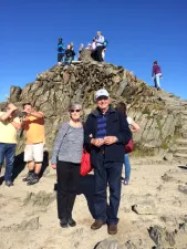
During one of our many stays in Anglesey in October 2015 on a particularly glorious day we took a trip up Snowden.
The souvenir is a replica of the top of the Snowdon ordinance survey triangulation station which is on the summit
A triangulation station, also known as a “trig point”, is a fixed surveying station, used in geodetic surveying and other surveying projects in its vicinity. In the United Kingdom, trig points are typically concrete pillars and were erected by the Ordnance Survey. The process of placing trig points on top of prominent hills and mountains began in 1935 to assist in the accurate retriangulation of Great Britain. The Snowden trig point was rebuilt in 2000.
We travelled up and down on the ancient steam train which took an hour each way. There is a cafe and toilets at the top. The weather was glorious for early October. The views were very impressive in every direction.



– A BALL POINT PEN FROM INVERCARGILL – NEW ZEALAND

In March 1990 I was invited on a CF Lecture Tour in New Zealand.
Ann and I had just finished a similar lecture tour in South Africa. In fact, it was on the escalator in Johannesburg Airport that I answered a phone call from New Zealand with an invitation to visit there for a similar tour! The visit would be funded by the pharmaceutical firm Janssen Cilag whose representative Angela would look after us for the first two weeks which she did very efficiently.
 We arrived in Auckland on Saturday March 3rd and stayed at the Hyatt Regency in that city. The local CF paediatrician, Alison Wesley, had been to visit our CF unit in Leeds and was partly responsible for inviting us back to New Zealand. On the day we arrived, almost as soon as we stepped off the plane, Alison drove us around Auckland to see the views; we were very tired after our long journey and found it difficult to keep awake! However, I managed to do a radio interview with Donna Chisholm from the Sunday Star at I pm. Our hotel room had a very good view of Auckland’s impressive harbour.
Our first day in New Zealand was a Saturday and when we walked into the main street in Auckland we were surprised to find all the shops were closed for the day at lunch time.


On Sunday we met with Alison Wesley and had dinner with John Weary – we were shown round the relatively new Starship Children’s Hospital (photo) and I did a ward round and had informal discussions with the staff. I had lunch with Professor Bob Elliott (photo) the head of paediatrics in Auckland who had published on a number of aspects of CF including neonatal screening, dietary supplements and the phenomenon of wrinkling fingers when immersed in water.. When I visited him he was keen to tell me how he was developing an insulin preparation for inhalation – obviously a lively researching mind!


Elliot’s paper in collaboration with the Auckland biochemist, Jeanette Crossley in 1979, described the immunoreactive trypsin (IRT) heel prick blood test for neonatal CF screening which is still used today – undoubtedly a “megapaper”. Megapaper is a term I use in my History of Cystic Fibrosis website (www.cysticfibrosis.online/history) to describe publications which have had a major influence on the understanding of or treatment of cystic Fibrosis. This one certainly did have a worldwide influence as I have described in detail on the our history website. Also I obtained comments for the website from Jeanette Crossley and Anthony Heeley – the biochemist from Peterborough who was an early pioneer in using this test since 1980 in East Anglia.
On the Monday afternoon there were two interviews with reporters; one with Michael Collins from the GP Magazine and another with Jill Mckenzie from a NZ newspaper. In the evening we had a meeting with the Auckland Cystic Fibrosis Association branch in the ballroom of the Hyatt Hotel. Over 100 people attended. Both my lecture and the following extensive discussions went very well.
On Tuesday 6th. A full day CF symposium had been arranged in the Marion David Theatre of the Auckland hospital. I gave two 45 minute lectures – one on the management of chest disease with particular reference to Pseudomonas in the morning and the other on the management of nutrition in the afternoon. In the evening after the symposium the Auckland Medical Society entertained Ann and me to dinner – I gave a short talk and answered some questions. The first course was Auckland oysters – a first for me!
The next morning we flew to Wellington – a short flight of only an hour – and were met by Bruce Kerr the Chairman of the Wellington Parents Group.
Tuesday March 7th. To Wellington – the capital of New Zealand
In Wellington we stayed at the Park Royal Hotel. In the afternoon we had a look round – cable railway, botanical gardens and tour of parts of the city. In the evening we met with Wendy Calnan and Sally Fortescue – the publicity officer of the NZ CF Association to discuss a radio interview booked for the next morning.

Angela, from Janssen Cilag, the pharmaceutical firm, escorted us during the whole working part of the tour. She was an expert on New Zealand wine and looked after us very well both re. travel, accommodation, food and wine.
We had a brief tour of Wellington, around the city and up the scenic railway
On Thursday 8th at 9.00am there was an interview with Pauline Swane from the Dominion Newspaper. At 10 am we were off to Broadcasting House for an interview with Maggie Barrie of Radio New Zealand

On Friday 9th I attended the Journal Club at the Wellington Hospital and in the afternoon attended a clinical presentation at the hospital.
At 4.30 we left Wellington by car to attend a CF branch meeting at Palmerston North.
The weather was really terrible and there was some flooding; we nearly didn’t make it. However, we did and I gave a lecture at the arranged time of 7.0pm. Palmerston North is a city of some 80,000 people situated 87 miles north of Wellington.
Saturday 10th we had free and had dinner with Angela in the evening. She was very skilful at choosing restraunts
Sunday March 11th. A 45 minute flight to Christchurch.
Subsequently the city suffered a number of severe earthquakes between 2010 and 2012. Apparently, the one in February 2011 was the strongest to be recorded in an urban area and 185 people were killed.

We were met at the airport by Peter and Sally Haughey of the Christchurch branch and we stayed at the Park Royal Hotel Christchurch. It was built in 1988 in the north-west corner of Victoria Square after much public protest, as it cut off the first part of Victoria Street, its construction happened at the same time and enabled the substantial redesign of Victoria Square.
The building had New Zealand’s largest atrium, and was one of the city’s largest hotels. The building suffered significant damage in the 2011 Christchurch earthquake and was demolished in April 2012.
Monday 12th. At 10am I had an interview with the Christchurch Press. Between 2pm and 5pm I was in the Adult CF Clinic at Christchurch Hospital with Dr Peter Thornley the Respiratory Physician – a very enjoyable an interesting afternoon – he is a very nice chap who organised the work part of our visit to Christchurch.

Tuesday 13th. At 12.00 noon there was a Registrars Meeting with presentation of CF patient histories on which I was asked to comment. At 7.30 pm we attended a Canterbury CF Association Branch Meeting in the Mckenzie Room of the Auto Lodge Hotel.
Wednesday 14th. At 9.30 am attended a departmental meeting of paediatricians, GPs, students and staff from the paediatric department. Then at 11.00 am over to the Princess Margaret Hospital to a clinical meeting relating to CF Adults organised by Peter Thornley. I did not give a presentation at this meeting but was asked to comment on the patients presented.

In the afternoon we saw a few of the sights during a short bus tour and later in the afternoon were guests at the Coringa Country Club where I presented the prizes to the winners of their golf competition This was the end of our visit to Christchurch. We flew to Dunedin the following morning.
Thursday 14th – on to Dunedin
The flight to Dunedin took only 45 minutes. We met the local paediatrician Chris Hewitt and his family who lived in a pleasant house overlooking the sea.
It became a routine on our tour that I would do a CF clinic with the local paediatrician and also a lecture to the hospital medical staff during the day and a parents meeting in the evening. So I spent much time shuffling hundreds of slides in the evening in our hotel room. This was before the days of PowerPoint!

Dunedin was very reminiscent of Scotland and, indeed, has been described as the Edinburgh of New Zealand; it is said to “wear its Scottish heritage with pride”. Surrounded by dramatic hills and at the foot of a long harbour, Dunedin is one of the best-preserved Victorian and Edwardian cities in the Southern Hemisphere One definitely seemed to be getting into a more outdoor type of mode here and we were able to see the albatross colony. There is a definite Scots influence in Dunedin. Apparently the early immigrants built their houses facing south to catch the sunlight not realising the sun came from the north when in the Southern Hemisphere!
Dunedin was linked to Christchurch by rail in 1878, with a link south to Invercargill completed the following year, and the first railway workshops were opened at Hillside in South Dunedin in 1875. Early plans were for a grand main station on Cumberland Street, but these did not get further than the laying of a foundation, and a simple temporary weatherboard station was built next to the site in 1884. It took close to 20 years for government funding to be allocated, and planning only really commenced as the 19th century was drawing to a close.
The logistics of constructing what was at the time New Zealand’s busiest railway station took three years before construction began in 1903. Dunedin required a station for a wide range of activities: it was a commercial and industrial centre, close to gold and coalfields, with a hinterland that was dependent on livestock and forestry for its economy.
The city’s largest industry now is tertiary education – Dunedin is home to the University of Otago, New Zealand’s first university (1869), and the Otago Polytechnic. Students account for a large proportion of the population: 21.6 percent of the city’s population was aged between 15 and 24 at the 2006 census, compared to the New Zealand average of 14.2 percent.
Our work in Dunedin started at 1.00pm on the day we arrived (15th March) with an open lecture at the Children’s Pavilion at the Dunedin Hospital on “The treatment of early Pseudomonas infection”. I spent the afternoon in the Children’s Department of Dunedin Hospital doing a CF clinic with Dr Hewitt. In the evening I gave a lecture on “Modern expectations in Cystic Fibrosis” to CF parents and adults in the seminar room of the Children’s Pavilion.
On Friday March 16th morning there was a CF Symposium where we discussed nutritional management, physiotherapy, case presentations and outpatient management. In the afternoon Chris Hewitt took us sightseeing when we saw the albatross colony. We also had the following day off went on a bus tour.
March 19th. On to Invercargill
The flight from Dunedin to Invercargill took only 35 minutes. We stayed at the Ascot Park Motor Hotel.
In the evening there was a meeting of the Southland Cystic Fibrosis Association branch at the Kew Hospital organized by Dr Ralph Pinnock, the local paediatrician, and Colin and Judy Millar of the local CF association. The audience were very pleasant people with a wide variety of questions. After the meeting one of the audience presented me with a ball point pen (I hope you like it he said). I recall this as being a really significant present from a really lovely community – more memorable than many of the Kiwis and other traditional commercial souvenirs.

Monday March 19th I attended the CF clinic at Kew Hospital. At lunchtime I gave a lecture for the hospital doctors and in the afternoon continued the CF clinic. Later in the afternoon we went sightseeing with Ralph Pinnock. Invercargill was interesting. It is one of the southern most cities in the World and most New Zealanders have never been that far south!
During the day Ann was shown round the city by the wife of the local paediatrician. She gained the impression that Mrs Pinnock was unsettled there as the place seemed so quiet and under populated. I remember Invercargill better than some of the larger cities we visited – in particular the garlic oysters we had the previous evening at the paediatrician’s house. We started our working trip with oysters in Auckland and finished it in Invercargill with oysters!

Ralph Pinnock took this photo during our tour of the city on our last afternoon. It was taken on the southern most part of the coast. We heard some time later that he and his wife had moved from Invercargill
In the evening we flew at 7.10 pm to Auckland via Christchurch.
– HARRY RAMSDEN’S FISH AND CHIPS

The story of Harry Ramsden’s Fish and Chips business is quite remarkable.This small model of a Harry Ramsden’s vehicle from the restaurant souvenir shop brings back many happy memories of visits to the original iconic fish and chip restaurant in Guiseley, Yorkshire.
The business was started by Harry Ramsden (1888–1963) in 1928 in a wooden hut in White Cross, Guiseley, West Yorkshire, northern England. Three years later Harry moved into a new premises, complete with fitted carpets, oak panelled walls, and chandeliers. The original hut still stands on the same site adjacent to the main restaurant, which once held the Guinness World Record for the largest fish and chip shop in the world, seating 250 people, serving nearly a million customers a year.


There was often piano music or other musical entertainment in the elegant restaurant. The waitresses were in traditional black dresses with white aprons and lace headgear. Many celebrities visited Harry Ramsdens – even including Mrs Thatcher.
In 1954, the business was sold to Harry Ramsden’s long term business partner Eddie Stokes for the (then) large sum of £37,500, and subsequently in 1965 to the Essex-based Associated Fisheries. The business achieved international recognition although following various financial changes in the years that followed, including the remarkable expansion to fast food outlets, in 2012 the business was in trouble and taken over by the very successful, family-owned Yorkshire Fish and Chip firm – the Wetherby Whaler.


The Wetherby Whaler is a chain of quite excellent fish and chips restaurants in the Yorkshire region. The first restaurant was founded in 1989 in Wetherby by Phillip and Janine Murphy with four more having been subsequently opened across Yorkshire – undoubtedly due to the excellence of their fish and chips. This was a great move as Harry’s was the most famous business in the North and the Wetherby Whaler had since its opening in Wetherby in 1989 produced the best fish and chips in the region; other “Whalers” had opened in York, Wakefield and Pudsey prior to the Harry Ramsden’s in Guiseley in 2012

I include this piece about the Harry Ramsden’s as Fish and Chips are very popular in the North. We visited the original Guiseley restaurant many times often with guests who came to stay. We took them for fish and chips in the original Harry Ramsden’s restaurant as one of the important landmarks of our area! We usually provided them with a small gift from the souvenir shop situated under the main building.
Undoubtedly, the “Whalers” have carried on the very high standard already in their other branches. I think Harry would have been pleased with how things have turned out.
– SALT FROM LUNEBURG IN GERMANY
I received an invitation from a gastroenterologist in Luneburg, Dr Paul Lankisch, to take part in a meeting devoted to the Pancreas. It was to be the basis for a subsequent publication on pancreatic enzymes


It was a relatively small group of the people, particularly involved in pancreatic matters, who would be writing the various chapters. my involvement was with the pancreas in cystic fibrosis.
I met some well known gastroenterologists at the meeting such a Eugene Di Magno from the USA. I gave a talk on “Pancreatic Enzymes in Cystic Fibrosis” and wrote the subsequent chapter in the book.


The city of Luneburg is interesting and famous for the production of salt so, of course, I purchased a small sack of salt as a souvenir for my study shelf which was becoming quite full even by then. The photos show various views of the historic city in the state of Lower Saxony. The houses in the historic quarter between the Lüneburg Salt works (today the German Salt Museum) and the Kalkberg were built above a salt dome that was excavated by the saltworks and which extended to just below the surface of the ground. As a result of the increasing quantities of salt mined with improved technical equipment after 1830, the ground began to sink by several meters. This resulted in the so-called Senkungsgebiet or “subsidence area”. The houses there and the local church (St. Lambert’s) lost their stability and had to be demolished.
Because of this subsidence, and because salt mining was increasingly unprofitable, the saltworks were finally closed in 1980. Today, only small amounts of brine are extracted for the health spa in the Lüneburg Thermal Salt Baths (the Salztherme Lüneburg or SaLü). One side of the saltworks now houses a supermarket, while the other is the German Salt Museum.
The closing of the salt mine in 1980, ended the thousand-year tradition of salt mining, although small amounts are still mined for ceremonial purposes. Small bags of salt may be purchased in the town hall, and bags are given as a gift from the town to all couples married in the town. After the closing of the salt mines, the town gained new relevance from its university, which was founded in 1989.
A CANDELABRA

A Leeds family doctor asked if I would see a child whose parents had recently brought their 6 year old daughter from Bangladesh in view of a serious progressive undiagnosed illness. She had been well to the age of 3 years when her tongue became red and painful; she suffered unexplained episodes of severe anaemia despite repeated courses of iron and folic acid and there was a gradual onset of muscular weakness. From 5 years she developed a coarse tremor of the limbs and face.
On examination the child was very weak and wasted (weight < 3rd and height 10th centile). She had difficulty swallowing, had slurred speech and saliva drooled from the side of her mouth. Her tongue was red, wasted and showed fasciculation.
Initial clinical assessment suggested a brain stem tumour but computed tomography showed unexplained mild hydrocephalus and a general decrease in size of other parts of the brainstem. Extensive metabolic investigations were also normal.
However, a second blood sample taken during a febrile episode was abnormal showing severe pancytopenia prompting bone marrow examination which was also quite abnormal and megaloblastic (cells larger than normal). The serum B12 was only 55 ng/l (low) normal range 110ng/l. Further tests confirmed gross B12 deficiency which subsequently we showed was due to defective absorption.

Treatment with vitamin B12 1 mg daily brought about an almost miraculous improvement. There was rapid response in the anaemia and bone marrow. Growth and weight accelerated (Ht to 25th, Wt to more than 25th centile) over 4 months and she became an active child, able to run unaided. The only residual abnormalities were some loss of peripheral sensation and absent tendon reflexes with slight reduction in power.
We concluded there was a failure of absorption of vitamin B12 from the small intestine. This was really a remarkable case and wonderful to see her gradually recovering. The parents and referring doctor were obviously delighted.
It was a good example of how many experts in a massive hospital, such as St James’s, working together solved a very serious and potentially fatal problem. As our wise Professor of Medicine at St James’s, Monty Losowsky, used to say “The Buck stops here Jim!”

Dr Steve Conway was my general paediatric registrar at St James’s at the time of this report. He subsequently went on to head the Leeds Adult Cystic Fibrosis Unit and finally become Director of both the Paediatric and Adult Leeds Regional CF Units at Seacroft and St James’s. He also became a leading international authority on cystic fibrosis. Steve and his wife Ella have remained our good friends over the years.
So why the candelabra? When their daughter was discharged the grateful parents kindly presented Steve and myself with candelabras – mine for three candles and Steve’s for a single candle! This souvenir brings back vivid and very pleasant memories.
THE CUTTY SARK MODEL


In 2006 Rosie Barnes, theChief Executive of the Cystic Fibrosis Trust, had a big 60th Birthday Party for her wide range of friends on the old clipper, the Cutty Sark, moored at Greenwich.
Ann and I came to know Rosie and her husband Graham very well during Rosie’s time as Chief Executive of the CF Trust from 1996 to 2010. I was Chairman of the Research and Medical Advisory Committee when she was appointed and from 2003 to 2011 Chairman of the CF Trust. So Ann and I became good friends with Rosie with whom we attended numerous meetings on behalf of the CF Trust both in the UK, Europe and North America.

Rosie came to national prominence as a member of parliament for Greenwich. Her husband Graham, who in 1986 had become an SDP local councillor in Greenwich, acted as her agent at the subsequent 1987 general election four months later when she was returned to parliament.. After the next election she retained the seat with a reduced majority. With the SDP split over whether to merge with the Liberal Party, Rosie strongly supported David Owen in his resistance to the merger but when the party was disbanded in 1990 she continued to sit in parliament as an independent Democrat. In 1992 she lost the seat to the Labour Party. Rosie’s likeable personality, experience with human relations and public speaking were of immense value to the CF Trust.


So Rosie had her 60th Birthday Party on the Cutty Sark for their many friends. The dress was 60s period time theme – Ann had the Mary Quant look and I did a rather mature Elvis
It was a very good party with a disco below decks after the meal. There were quite a few political friends of Rosie’s and she introduced us to a few of including Lord Owen – Dr David Owen who was at one time the Foreign Secretary; when younger David was her contemporary in Parliament and even earlier he was a colleague and friend of our Roy Meadow at Guy’s Hospital
The Cutty Sark is a British clipper ship. Built on the River Leven, Dumbarton, Scotland in 1869 for the Jock Willis Shipping Line, she was one of the last tea clippers to be built and one of the fastest, coming at the end of a long period of design development for this type of vessel, which halted as steamships took over their routes. She was named for the fictional witch, Cutty-sark. (There is a long interesting history on Wikipedia)

On the morning of 21 May 2007, Cutty Sark, which had been closed and partly dismantled for conservation work, caught fire, and burned for several hours before the London Fire Brigade could bring the fire under control. Apparently an industrial vacuum had been left running for 2 days and overheated. Initial reports indicated that the damage was extensive, with most of the wooden structure in the centre having been lost. The Cutty Sark did not reopen again for visitors until 2012 after extensive renovation.
The model we have of the ship brings back memories not only of this excellent party but also of many happy times we had with Rosie and Graham over many years from 1996 to 2010.
– THE ROSSI MEDAL OF THE EUROPEAN CF SOCIETY
Every year, at the opening ceremony of the European Cystic Fibrosis Conference, from 2003 onwards the ECFS honours “a person who has made a significant contribution to our basic understanding of cystic fibrosis or to the treatment or care of patients with cystic fibrosis”. I was delighted and very proud to receive the award in 2004 as recognition to the contribution made by the Leeds CF unit over the past 25 years.

Professor Ettore Rossi (1915-1998) qualified as a doctor in 1940 and became Professor and Chairman of the Department of Paediatrics of the University of Berne, Switzerland in 1956 until he retired in 1985. A consideration of his curriculum vitae describes a paediatrician and scientist who was really larger than life – a giant of European paediatrics . He was one of the central figures involved in the development of many areas of paediatrics in Europe, including cystic fibrosis. In 1969 he became the first Chairman of the European Working Group on Cystic Fibrosis (later to become the European Cystic Fibrosis Society).
I met professor Rossi only briefly on a few occasions. One incident left me with a lasting impression of his kindness and humanity. At a major International CF Conference in Toronto in 1980, Rossi was chairing a large plenary session, when one distinguished European professor, presented the results of a study which had involved CF children in numerous annual needle biopsies of the liver. Rossi told the presenter, in no uncertain terms, just what he thought of the ethics of the study.
Some years later I was chairing a gastroenterology session at an ECFS meeting in Europe. There was one presentation on the programme from the CF unit in Vancouver involving a limited number of liver biopsies before and after treatment with ursodeoxycholic acid. I spotted Rossi sitting at the back of the room. In the interval I reminded him of the incident in Toronto many years earlier, which he remembered clearly. I reassured him the study coming up was excellent, very ethical and I hoped he would find it acceptable. He laughed and said not to worry as he was familiar with the excellent study from Davidson’s unit in Vancover that was to be presented.


AN ARTICLE IN POLISH
 In September 1995 I was invited to give a talk on “Pancreatic Enzymes” at the Annual Meeting of the Polish Paediatric Society
The Polish paediatricians were a very friendly audience. Prior to my arrival I had arranged for the main content of my talk to be prepared in Polish for publication – a first for me – hence the rant page is my souvenir of the trip!
My talk seemed to go well. I had spent some time preparing my greeting to the audience in Polish- “JEN DOBRE”! (Ann had an excellent phrase book!). Seemed to get the proceedings off to a good start.
The other interesting feature of the meeting was at the conference dinner which was followed by a ladies fashion show! Apparently this was usual after the conference dinners as most of the paediatricians in Poland who attend the meeting are ladies.


According to Wikipedia the city’s history is complex, with periods of Polish, Prussian and German rule, and autonomy as the Free City of Danzig.
 An important shipbuilding and trade port since the Middle Ages, in 1361 it became a member of the Hanseatic League which defined its economic, demographic and urban landscape for several centuries. In 16th century, Gdańsk experienced its Golden Age and thanks to its grain exports became one of the wealthiest cities in Europe.
From 1918 to 1939, Gdańsk lay in the disputed Polish Corridor between Poland and Germany; its ambiguous political status created tensions that culminated in the Invasion of Poland and the first clash of the Second World War at nearby Westerplatte.
The contemporary city was shaped by extensive border changes, expulsions and new settlement after 1945. In the 1980s, Gdańsk was the birthplace of the Solidarity movement, which played a major role in bringing an end to Communism in Poland and helped precipitate the collapse of the Eastern Bloc, the fall of the Berlin Wall and the dissolution of the Warsaw Pact.
We had a very pleasant two days exploring the very impressive city. In the photo of me in the distant background can be seen the oldest medieval crane. The treadwheels, human-sized hamster wheels, supplied the force on the ropes that lifted the cargo to and from the waiting ships below.
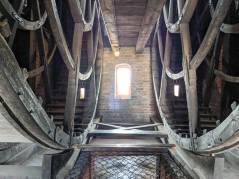

(both illustrations from Geoffrey Robinson’s website)
KENTUCKY FRIED CHICKEN

Although I have no solid souvenir of Kentucky Fried Chicken, Ann and I recall clearly the first occasion, many years ago, when we were introduced to this great food! Since then I have been a “KFC” addict. A Party Bucket always reminds me of a very pleasant evening we spent with a senior respected colleague many years ago.
It was in the mid-Sixties, when I was a Tutor in Paediatrics in Leeds wit Professor Stuart Craig. My wife Ann had retired from nursing to look after Susan our first child born in 1964. Around that time I was doing work for my MD thesis on neonatal urinary infections at the Leeds Maternity Hospital (LMH). I had considerable contact with the laboratory at that hospital and much assistance from Peter Kite the Chief Technician and his wife Beverley; also from Dr Hans Gerhart Kohler, the consultant pathologist at the hospital. All three were of enormous help to me as I toiled to microscope, do cell counts and culture thousands of urines from newborn babies collected for me by the really wonderful Ward Sisters. The work eventually led to a number of combined publications with the Kites and Hans Kohler and incidentally to an MD for me.
– Littlewood JM. Kohler HG. Urinary tract infection by Trichomonas vaginalis in a newborn baby. Archives of Disease in Childhood. 41(220):693-5, 1966 Dec. PMID: 5927928
– Littlewood JM. Kite P. Kite BA. Incidence of neonatal urinary tract infection. [ Journal Article] Archives of Disease in Childhood. 44(237):617-20, 1969 Oct. PMID: 4981204
How does all this lead to KFC you ask? Well, I obviously became friends with the laboratory staff at the LMH and had many discussions with Hans Kohler whom I came to respect for his meticulous approach to all he did.
Hans Kohler was Consultant in perinatal pathology at the Leeds Maternity Hospital 1963-80. He was born in Spaaz, Bohemia, in 1915; qualified at Charles University, Prague, 1938; FRCPath 1966). He died from the complications of Parkinson’s disease on 13 June 2004.
Hans’ early life reflected the turmoil in central Europe caused by two world wars. He was born in Bohemia, then lived in Austria and later in Czechoslovakia, to parents ethnically Jewish and culturally German. Hans, a free thinker, became an atheist aged 12 and a Young Communist at 15. He was politically active while still a medical student in Prague and when fascism darkened Czechoslovakia, he decided to leave. Using false papers he was on the last Kindertransport for Holland. Once in Britain he enlisted in the Czech army-in-exile, becoming an RAMC captain. His parents survived Auschwitz, but his only brother died on the forced march from Auschwitz to Dachau.

Hans was appointed consultant pathologist at Leeds Maternity Hospital in 1963. A believer in education he successfully encouraged his technical staff to take degrees (unusual at that time) and found time for research and many publications. An expert in placental pathology he contributed the chapter on the umbilical cord in several editions of Haines & Taylor. Fluent in German, Czech, and English he read widely in these languages—poetry, politics, as well as medicine. He was particularly interested in the poet Eduard Meissner and wrote a BMJ article about him (BMJ 1990;300:1123-6). He loved his adopted county of Yorkshire—walking its dales, swimming in its reservoirs, and exploring its history into his Eighties. In 1994 he was diagnosed as having Parkinson’s. At his funeral the mourners sang, at his request, “The Internationale” and “Ilkley Moor.”
Hans married twice—to Anna and later, as a widower, to Hanna, both of whom had been fellow students in Czechoslovakia. He leaves a son and two daughters. (Details from http://www.gene.com/people/Dr Hans Kohler).
Again, I hear you ask “How do we get back to Kentucky Fried Chicken?”
Hans Invited Ann and myself and another colleague to his flat in Weetwood North Leeds for supper. After a drink and some conversation Hans excused himself for a few minutes. Unbeknown to us he travelled the half mile to a newly opened Colonel Sanders KFC outlet and a few minutes later returned with our supper – a Party Bucket of KFC! It was delicious and to this day has remained one of my favourite meals.
 Kentucky Fried chicken (KFC) is an American fast food restaurant chain headquartered in Louisville, Kentucky, that specialises in fried chicken. It is the world’s second-largest restaurant chain after McDonald’s, with 22,621 locations globally in 150 countries as of December 2019.
I recounted this story of my love of KFC to Alexander, an American friend of Emily, one of my granddaughters. Subsequently, he made a mug in KFC style but with JFC and my image instead of the Colonel’s. He presented this JFC mug to me on my 92nd birthday. A very original present which he had fashioned himself. I much appreciated the time, effort and thought which had gone into this present..
SUPER LAMBANANA

Lambanana is the title of the Lambanana sculpture, an iconic Liverpool landmark that combines a lamb and a banana. It was created by Japanese artist Taro Chiezo for the 1998 ArtTransPennine Exhibition. It is said they serve as a humorous and ironic commentary on genetic engineering and also symbolises Liverpool’s historic role as a major port for both sheep and bananas
As part of the European Capital of Culture celebrations in 2008, 125 miniature replicas were dotted around Merseyside. The two-metre high sculptures were developed in partnership between the Liverpool Culture Company and Wild in Art, and each one was sponsored by local businesses. The Lambananas remained on display for 10 weeks of summer before being auctioned off for the Lord Mayor’s charities. More than £500,000 was generated for good causes, with one mini-Superlambanana fetching a remarkable £25,000!
I include this replica to remind Ann and myself of some of the many visits to Liverpool over the years for varied reasons many, but not all for medical meetings many of which were concerned with cystic fibrosis. Two were indeed large Annual Conferences of the Cystic Fibrosis Trust memorable for the excellent invited speakers from USA and Australia. for the keynote lectures. and the interesting evening we and CF Trust staff spent with them.

Author’s photo at time
Professor Claire Wainwright is the Head of Cystic Fibrosis (CF) services which provide state-wide services for around 420 children with CF across Queensland. She also runs the respiratory service for the only national clinic caring for children with ataxia telangiectasia. She has a long standing research interest in airway diseases, including bronchiolitis, asthma, cystic fibrosis and rare lung diseases. Professor Wainwright conducted the first randomized trial of BAL-directed therapy to improve clinical outcomes in infants and young children with CF. She has also been instrumental in the design and conduct of clinical trials that have brought ivacaftor and lumacaftor to the CF community. (Citation on election to Australian Academy of Health and ~Medical Sciences in 2016)
Dr. Michael Boyle is an Adjunct Professor of Medicine at the Johns Hopkins University School of Medicine, and

subsequently he became President and CEO of the U.S. Cystic Fibrosis Foundation. His areas of expertise include adult cystic fibrosis care and research. Dr. Boyle founded and directed the Johns Hopkins Adult Cystic Fibrosis Program from 1999 to 2015 at the Johns Hopkins Cystic Fibrosis Center. While at Johns Hopkins he has received numerous honors including the American Lung Association’s George Comstock Career Achievement Award, American Federation of Clinical Research Achievement Award, “Patient’s Choice Award”, “Best Full-Time Faculty Teacher”, and “Best Doctors in America”.
Another interesting visit to Liverpool in early January was an invitation for us to attend Rosalind Smyth’s Inaugural Lecture as Professor of Paediatrics at Liverpool University

We had both known Ros since she was appointed as one of the early CF Trust Research Fellows (registrar grade jobs in the 80‘s funded by the CF Trust at many of the major medical centres where CF units were developing). These doctors were already paediatric registrars and usually stayed for 2 years working in the same CF centre. They made a major, no massive, contribution to developing the increasing complex CF care. Many went on to be CF consultants or paediatricians with a special interest in CF.
Ros had been a CF Research Fellow at Papworth Hospital, Cambridge with Mr John Wallwork who performed some of the first heart-lung transplants in the mid-Eighties. She then moved to Liverpool as consultant and subsequently was appointed first Reader then Professor of Paediatrics there in 2001 – hence this inauguration ceremony. More recently in 2013 she was appointed Head of the Institute of Child Health at Great Ormond Street in London. Her younger brother Alan eventually became Professor of Paediatrics in Nottingham and also a recognised authority on CF. Definitely a very talented family!
When she was at Liverpool Ros started the first Cystic Fibrosis Cochrane Group with some financial support from the CF Trust. This went from strength to strength to eventually become The Cochrane Cystic Fibrosis and Genetic Disorders Group (CFGD.cochrane.org). Their new office was opened in 2019 with contributions from the University of Liverpool and the CF Trust and was named after the late Dr Sarah Walters OBE, an exceptional doctor with CF, who died in 2018.
A FOSSIL FROM THE TUBINGEN FOREST


In November 2001 I was invited to Germany by Prof. Martin Stern, Director of the Tubingen CF Centre, to give a lecture on “How to establish s Cystic Fibrosis Centre” at his his annual CF meeting for professionals in southern Germany. The meeting was held at the impressive Hotel Schloss Weitenburg.. The Hotel Schloss Weitenburg is a huge old chateau-type hotel in the forests near Tubingen. There are long pannelled corridors full of stuffed animals’ heads – definite shades of Harry Potter, which, coincidentally, we had seen the film the previous week!

The lecture went well and (thanks to Ann – now my unpaid IT manager!) the PowerPoint presentation was excellent! The next day Ann and I had a tour round the very impressive old town with its ancient university founded in 1477.
At the dinner after the meeting Martin presented me with a souvenir – a stone fossil which he had found that morning on his health jog . He is a very nice guy Subsequently I met him on a number of times at various European CF Society meetings, one I particularly remember in the Jewish Church when were both sightseeing. round the city of Prague. The international cystic fibrosis conferences were very valuable for meeting other professionals from many countries involved in various aspects of CF..
A MINATURE POTTY


When driving home to Leeds after a short holiday in Norfolk in 2014, we called at Tattersall Castle in Lincolnshire. Tattershall Castle has its origins in either a stone castle or a fortified manor house, built by Robert de Tattershall in 1231. This was largely rebuilt in brick, and greatly expanded, by Ralph Cromwell, 3rd Baron Cromwell, Treasurer of England, in the 15th century. Tree ring-dating indicates that construction was underway between 1406 and 1431.
Incidentally, I had not heard of tree-ring dating, or dendrochronology, which is a scientific method of dating that uses the annual growth rings in trees to determine the precise calendar year a piece of wood was formed. By analyzing the patterns of wide and narrow rings, scientists can establish a timeline of past climate conditions and, by comparing samples to a known chronology, can provide exact dates for archaeological sites, buildings, and other wooden artifacts. (Wikipedia)


Apparently, miniature chamber pots with an eye inside, also known as “peeping eye” or “watching eye” pots, were decorative novelties, often given as wedding gifts, used for dollhouses, or sold as humour or souvenir items from the late 19th century into the 20th century and beyond. Popular phrases or mottos on these pots included “Vive la Mariée” (Long Live the Bride), “Evening Exercise,” or “Good Night,” and they were sometimes designed with a whimsical or “all-seeing” eye to look out from the bottom of the pot. They now appear to be collectibles.
– A CRETAN WINDMILL

One of the many European CF Conferences Ann and I attended was the 25th Annual Meeting in Crete. This was a good meeting, almost like a holiday. The weather was perfect and the conference dinner was outside by the sea,
We had a few days afterwards to see something of the island with Rosie and Alan Larson, who hired a car. We had a very pleasant few days after the meeting finished touring round with them on the plateau, Alan driving and Rosie advising on the stops for refreshments!
The farming on the plateau is largely by traditional methods and there are many of the traditional windmills. The windmills are interesting and apparently designed to function with minimal wind speeds.


We made a day trip to SPIROLANGA . The island was maintained as a fortress for centuries under Venetian rule. It later became a refuge for Muslim families fearing persecution, and finally a leper colony in the early 20th century.
The island has been uninhabited since 1962; though it has undergone some restoration work in the years since. Today, it is the second most visited tourist site in Crete, and sixth in Greece overall.
“The Island” is a historical novel written by Victoria Hislop. It won several awards including Newcomer of the Year at the 2007 British Book Awards. The book was nominated for the Book of the Year award at the same event.
On the brink of a life-changing decision, Alexis Fielding longs to find out about her mother’s past. But Sofia has never spoken of it. All she admits to is growing up in a small Cretan village before moving to London. When Alexis decides to visit Crete, however, Sofia gives her daughter a letter to take to an old friend, and promises that through her she will learn more.
Arriving in Plaka, Alexis is astonished to see that it lies a stone’s throw from the tiny, deserted island of Spinalonga – Greece’s former leper colony. Then she finds Fotini, and at last hears the story that Sofia has buried all her life: the tale of her great-grandmother Eleni and her daughters and a family rent by tragedy, war and passion. She discovers how intimately she is connected with the island, and how secrecy holds them all in its powerful grip..
Rosie Barnes kindly gave me a copy of the book which was very good and lived up to the glowing reviews; it can be recommended as a good read.


Leprosy, also known as Hansen disease, is a chronic infectious disease caused mainly by a type of bacteria called Mycobacterium leprae. The disease affects the skin, the peripheral nerves, the mucosa of the upper respiratory tract and the eyes. Apart from the physical deformity, persons affected by leprosy also face stigmatization and discrimination. However, leprosy is now curable and treatment in the early stages can prevent disability. The currently recommended treatment regimen consists of three medicines (dapsone, rifampicin and clofazimine) and is referred to as multi-drug therapy (MDT).
Today, millions of people are affected by leprosy, including those yet to be diagnosed and people cured but permanently disabled. The World Health Organization (WHO) reported that there were 182,815 diagnosed and treated in 2023. 59 per cent of new cases of leprosy diagnosed in 2023 were found in India. (information from various sources).
– THE LITTLE MERMAID OF COPENHAGEN

The Little Mermaid is a bronze statue by Edvard Eriksen, depicting a mermaid becoming human. The sculpture is displayed on a rock by the waterside at the Langelinie promenade in Copenhagen,
Based on the 1837 fairy tale of the same name by Danish author Hans Christian Andersen, the small and unimposing statue is a Copenhagen icon and has been a major tourist attraction since its unveiling in 1913. In recent decades it has become a popular target for defacement by vandals and political activists (Wikipedia)
Over the years I have visited Copenhagen on many occasions for a variety of reasons – usually in some way related to cystic fibrosis
There can be few professionals involved in the treatment of people who have cystic fibrosis who are unfamiliar with the publications from the cystic fibrosis unit at the Rigshospitalet in Copenhagen. I was therefore delighted when Gaurang Majmudar of Pharmax Ltd ( the makers of the antibiotic colomycin) invited me to visit the clinic to help with the making of a video dealing with their treatment regimes. The visit would include detailed discussions with Dr Christian Koch (Clinic Director), Professor Niels Hoiby (Professor of Microbiology and Dr Birgitte Frederiksen (a senior clinician on the unit). We would also meet with patients, parents and other members of the CF team.
 So, in September 1997 we spent two days at the Rigshospitalet, the University Hospital of Copenhagen where the staff made us most welcome – us being Murang Mugmadar(Senior Product Manager at Pharmax) , Des O’Brien (producer), Andy Taplin (cameraman) and Per Nordentoft (sound recordist), from Denmark.
During our visit we had the opportunity to observe and talk with an adult patient making a visit to the CF ward during a course of intravenous antibiotic treatment and a 5 year old boy and his mother during a clinic visit; we later visited them at their home.

I also had long discussions with the senior doctors Niels Hoiby, Christian Koch and Brigitte Frederiksen whom I already knew from previous visits and CF meetings. Also, with members of the clinic staff.
Prior to the visit I had contacted many of the UK Colleagues who were responsible for CF Clincs to enquire if there were any particular questions to ask the Copenhagen staff. Their excellent response reflected their great interest in the Danish CF Clinic. Predictably, many questioned the evidence for the Danish 3-monthly intravenous antibiotic regime used in Copenhagen for those patients chronically infected with Pseudomonas aeruginosa. Virtually all questions concerned the respiratory management.
Visiting their unit one is immediately conscious of friendly welcoming atmosphere and a good easy relationship between patients parents and clinic staff. The senior clinic nurse Annalisa has worked there for 28 years and combines the functions of clinic nurse manager CF nurse specialist and friend and advisor to the patients and their families. She has other nursing assistance but most of the IV antibiotics work seems to be done on the ward.
There is less emphasis on home visiting and treatment than in the UK, frequent visits to the clinic and ward or admission are being preferred when a course of antibiotics is required. The dietician is situated on different floor to that of the main clinic but can be seen when required for example if weight gain or growth is a problem Transfer to the adult clinic is no problem. The other striking difference between Danish and UK was a Danish patients continue their care act the paediatric unit an uninterrupted continuum from infancy through childhood and adolescence and into adult life. The patients are seen by the same staff and attend the same clinic. Certain days are reserved for adult patients. There appear to be no problems with the arrangement which was popular with both the staff and patients the adults to whom I spoke was very happy with the system as we have fellow adult patients so when to transfer and to whom we no problem the self consisted consider it important that they had opportunity to follow patients through into adulthood are good features of the clinic with a strict segregation on microbiological grounds was observed. An adult clinic was opened in 2008 as the numbers and survival of patients increased.
Strict segregation on bacteriological grounds was emphasised This was still a subject of debate in the UK following the introduction of our segregation policy. The main annual incidence of patients becoming chronically infected in ~Copenhagen fell from 17% in the year 1976 to 1982 only 3% between 1986 and 1987 frequent and detailed microbiological survey surveillance of the clinic population regarding it as a high priority and under the supervision of Niels Hoiby and his clinic staff were very experienced and very alert to the risk of multiple resistant organism spreading within the clinic population. Niels Hoiby observed such experience certainly alters one’s attitude and encourages a policy of strict segregation and microbiological surveillance. He stressed the importance of close microbiological surveillance to identify importance strains of bacteria and their spread at an early stage when they could be easily controlled. He warns that if such strains are allowed to spread through a significant number of patients before the problem is recognised, control is difficult if not impossible.

The clinic was started in 1968 by Professor Flensborg and 346 patients have attended there between 1948 and 1993. Data on 330 patients seen more than once between 1974 and 1993 were reviewed in 1996. In 1993 244 patients were attending the clinic representing 75% of the Danish CF patients. The rest of whom attended a second centre in Arthurs started in 1990 in the north.. At present there were 265 patients (3.8% aged 0 to 10 yrs, 28.7% 10 to 20 yrs and 31.7% 20 to 30 yrs; 13.6, 2.3% were over 40 years old 62% are over 15 years old the main age of the patients is 19 years and the age of the range is from no to 50 years between 1989 and 1993. There is close regular monitoring of the patient’s condition and this is regarded very important part of care. Patients have always attended the CF clinic on a strict monthly basis, clinical status, pulmonary function and microbiology of the lower respiratory tract are monitored coupled with aggressive antimicrobial treatment of isolated pathogens according to the fixed protocol of the clinic. All patients receive all their care at the clinic. There is no shared care as we know it in the UK.
In Denmark most patients were treated at the main Danish CF Centre in Copenhagen from 1968 where it was shown subsequently that the outlook could be improved in chronically infected patients by more aggressive treatment with regular courses of intravenous antibiotics (Schiotz et al, 1981 ; Jensen et al, 1989 ). The Danish CF centre in Copenhagen was started by F W Flensborg and provides one of the most advanced CF services in the world.
During the making of the video, over two days I had the opportunity to interview, patients, parents and staff of the clinic. It was a very enjoyable and informative couple of days.
The video was subsequently shown at all the UK CF centres and the booklet I wrote about the visit was made available to all staff. It was generally regarded as very interesting and useful..

On two further occasions I was honoured to be invited to Copenhagen.
In 2008 to speak at the opening of their Adult CF Unit in the Rigshospitalet.
In 2013 to give a lecture at Copenhagen University at a meeting to celebrate Niels Hoiby’s 25 years as Professor of Microbiology.
I was asked to describe Niels’s unique contribution to the microbiology and treatment of people with cystic fibrosis. It was a good meeting and it was easy for me to describe Niels’s enormous contribution to the understanding and treatment of CF infections on which he is undoubtedly the world expert. One of their major clinical advances was a trial on the early treatment of Pseudomonas which he generously said was prompted by my original letter to the Lancet reporting the success of early treatment of the organism with inhaled colomycin.
This is discussed elsewhere in my history (cfmedicine.com/history) in the 1985 clinical section as follows –
“1985 Littlewood JM, Miller MG, Ghoneim AT, Ramsden CH. Nebulised colomycin for early Pseudomonas colonisation in cystic fibrosis. Lancet 1985; I: 865. [PubMed]
The first report of the use of nebulised colomycin (figure 26) to eradicate early Pseudomonas infection and, although only a modest letter, was undoubtedly the most important publication of my career!. Eradication had previously been thought to be impossible. Subsequently, and according to Niels Hoiby, as a result of this short letter to the Lancet, in Copenhagen they started a controlled trial of early eradication therapy (Valerius et al, 1991 below) and found their results “confirm and extend the preliminary report by Littlewood and colleagues”. We had been using nebulised colomycin in Leeds since about 1983/84 when Pseudomonas was first isolated to attempt eradication and after treating seven patients it was quite apparent that in some cases the organism was cleared from the sputum contrary to current teaching; so we reported our anecdotal experience in this letter to the Lancet.
The slow introduction of early eradication therapy, particularly in North America, is difficult to understand although perhaps one reason was that, in the early Eighties, the serious long term consequences of chronic Pseudomonas infection were only just being clearly described; most publications documenting the unfavourable outlook for patients with chronic Pseudomonas infection did not appear until the early Nineties. However, now early eradication treatment is routine in all countries – in fact, failure to treat early and eradicate would be regarded as bad practice”.
The unique contribution of the Copenhagen CF Centre is the subject of a recent excellent article by Niels.
Niels Høiby. Cystic fibrosis and the clinical biofilm revolution. A survey of the Danish CF Center’s contribution. Biofilm 2024 Dec 20:9:100246. doi: 10.1016/j.bioflm.2024.100246. eCollection 2025 Jun. pubmed.ncbi.nlm.nih.gov/39811797
The article can be accessed in full via the Pubmed link and is really excellent.
.
– DECANTER FROM THE NORTHERN CF CLUB
 I started this club (eventually known as “The Northern CF Club”) in the mid Eighties for the few consultants who were building up CF Centres – really it was a mutual support society (with it must be admitted plenty of drink!). There were three recognised CF clinics in the London area at GOS, Brompton and Carshalton. I thought we Northern consultants should get together and form a mutual support group for we were seeing more patients and encountering many new clinical problems. So this was a mutual support group for consultants developing CF clinics and their junior registrars (CF Research Fellows) involved in full time CF work. I chaired and organised the NCFC meetings which were almost entirely devoted to discussion of difficult clinical problems when we could seek the advice of our colleagues – this was the main purpose of the club.

We would meet at 4.0pm on a Friday every 4 -6 weeks at the Cottons – a hotel in Knutsford, Cheshire. We would discuss patients (a 10 minute presentation by the consultant and then general discussion) refreshed by a round of drinks at 6 pm and then dinner about 7pm. We would then have dinner and informal chat until late in the evening and travel home next day after an excellent breakfast. All meetings were funded by a pharmaceutical company, initially by Cilag (makers of Pancrease) but mostly in recent years by Pharmax (now Forest Labs, makers of colomycin). The meetings were great success to the extent that a similar club was started in the South!
I continued to organise and chair the meetings until November 1997 when I handed over the Chair to Kevin Webb of Manchester. When I was presented with a decanter by Forest Laboriatories and they arranged for this group photograph!

Photo: L to R. Alan Smyth (Nottingham Paediatrics), Warren Lenny (Stoke P), Gary Hambleton (Manchester P), Chris O’Callagahan (Leicester P), Chris Taylor (Sheffield P) under green light, Maurice Super (Manchester P) centre, Martin Walshaw (Liverpool A), Kevin Webb (Manchester A), Jim Littlewood (Leeds P), Christine Etherington (Leeds A), Charles Pantin (Stoke A), Steve Conway (Leeds A), Sunita Seal (research fellow Leeds P), Chris Davis – bald back right (long serving member of Forest staff).
Although the NCFC continued when I retired Kevin Webb opened it to any interested professional involved in CF it became more like any other average small clinical meeting – rather disappointing. However, it served its purpose over the decade after I started it when those of us developing CF centres were all on a steep CF learning curve; that’s why I restricted invitations to senior medical colleagues and CF Fellows and scientists with a particular interest in CF who were responsible for treating people with CF- clinicians who were regularly encountering new difficult problems they had not seen previously when they could discuss with colleagues. There was no shortage of new problems members presented at the 10 minutes case presentations.
With the wealth of expertise attending the meetings I decided it was important we should produce at least one useful publication to justify our enjoyable and valuable meetings!!! So my colleague Steve Conway kindly coordinated a study to produce a new CF Xray scoring system to which all members contributed and which resulted in a very useful publication. We concluded The Northen scoring system fulfilled the requirements of a chest X-ray score more successfully than the Chrispin-`Norman or Brasfield Systems and does not require a lateral film – a major advantage where patients are receiving numerous chest X-rays over the years.


The chest radiograph in cystic fibrosis: a new scoring system compared with the Chrispin-Norman and Brasfield scores. Thorax. 1994 Sep;49(9):860-2. doi: 10.1136/thx.49.9.860.PMID: 7940422 Free PMC article.
– BANQUET AT THE MANSION HOUSE, LONDON MARCH 2004
It was really a magnificent evening attended by many dignitaries including our Patron, HRH Princess Alexandra the Lord Mayor of London and hs wife. The evening was obviously a resounding success as regards fund raising. Ruth Angel made great efforts in organising an evening which we will never forget and for which the CF Trust was most grateful. Princess Alexandra’s Lady-in Waiting wrote a warm letter of thanks reporting how Princess Alexandra enjoyed the evening – I suppose a routine type of thanks but rather nice anyway.
Sitting next to the Princess, I had a long talk with her during the evening – much of it concerning bringing up children and the place of punishment! She was a very nice person and very easy to talk to. I really enjoyed the evening.
Nicky West, an adult who has CF, bravely gave an interesting talk even though her chest was very bad and she required continuous oxygen.
As Chairman of the CF Trust, my only formal function was walking in with HRH to the applause of the room and to propose the Royal Toast which I did without a hitch – thanks to the coaching from the excellent professional toastmaster who can be seen standing in the background. Ann is sitting just off the R. side of the photo.


– THE SAMUEL GEE CENTENARY COELIAC SYMPOSIUM


In 1988 there was a memorable meeting at St Bartholomew’s Hospital in London which Ann and I attended.
The meeting was to mark the hundred years since coeliac disease was first described by Samuel Gee, (1839-1911) a paediatrician and physician at that hospitaL. Gee published the first complete modern description of the clinical picture of coeliac disease, and speculated on the importance of diet in its control.
Gee gave the first modern-day description of coeliac disease in a lecture at the Hospital for Sick Children, Great Ormond Street in 1887. His interest in the history of medicine, and ability to read ancient Greek, meant Gee was familiar with the work of Aretaeus of Cappadocia who first wrote of “The Cœliac Affection”. Gee’s classic account was published in the St. Bartholomew’s Hospital Reports of 1888
Gee SJ (1888) “On the coeliac affection” St Bartholomew’s Hospital Report 24:17-20

The symposium was impressive with presentations from many of the well known experts from UK and overseas who had contributed to the present understanding of the cause of the condition. Many are on the stairs in the group photo.
At the meeting I was very fortunate to share a table at the buffet lunch with Professor Charlotte Anderson who was involved in confirming the central role of gluten and Dr Margot Shiner, who performed the first per oral jejunal biopsies in coeliac children describing the subtotal villous atrophy of the jejunal mucosa.
WK Dicke, a ~Dutch paediatrician, in his MD thesis, first identified the central roll of wheat flour – the results of years of clinical observation and dietary treatments.

Dicke W K . 1950 Coeliac disease. Investigation into the harmful effects of certain types of cereal. MD Thesis University of Utrecht.
Dicke W K. Weijers H A, van de Kamer JH . Coeliac desease , presence in wheat of a factor having deleterious effect in cases of coeliac disease. Acte Paediatrica Scandinavica 1953 42: 34-42

Saskula J, Shiner M. Coeliac disease with atrophy of the small bowel mucosa. Lancet 1957: 11;876.
Anderson CM. Histologtical changes in the jejunal mucosa in coeliac disease. Arch Dis Child 1960;35:419- 427.
Anderson CM, Frazer AC, French JM et al. Coeliac diseases gastrointestinal studies and the effect of dietary of dietary wheat flour. Lancet 1952 i: 836-842.

Eventually, the two most important causes of this syndrome of the “coeliac affection” were identified as gluten-induced enteropathy, or coeliac disease as we know it today, and cystic fibrosis. Subsequently two important advances in the Fifties permitted a clear separation of these two conditions. The first was the discovery of the elevated salt content of the sweat in CF reported in 1953 by Paul di Sant’Agnese from New York (di Sant’Agnese et al, 1953 ). The second was Willem Dicke’s discovery of the central role of “a factor in wheat” (gluten) in the aetiology of coeliac disease reported in his MD Thesis in 1950 (Dicke et al, 1953 below).

Subsequently the characteristic histological small bowel appearance of subtotal villous atrophy of gluten induced coeliac disease was first identified by Paulley in 1954 in fresh operative specimens from adults with idiopathic steatorrhoea (coeliac disease) (Paulley J W. Observations on the aetiology of idiopathic steatorrhoea. Jejunal and Lymph node biopsies. BMJ 1954; 173:1318-1321. .


In 1957 Margot Shiner showed the subtotal villous atrophy in specimens obtained by per oral small bowel biopsy from an 8 year old child and subsequently in all affected children by Charlotte Anderson in 1960. In contrast, the intestinal villi are of normal height in people with CF – in fact in some children with CF we found them to be even taller than normal.

In the group photo, the more distinguished attendees appear to be higher up the staircase. Ann and myself are lower left in red top and grey suite respectively!!
Further information in my detailed personal review of our 108 children seen and followed personally with childhood coeliac disease – a chapter invited by my friend and colleague Professor Peter Howdle (just visible on the lower stairway with head to right).
J M Littlewood. Coeliac disease in childhood. Bailliere’s Clinical Gastroenterology Coeliac Disease VOL 9 /Number2 Ed Pd Howdle pages 295-238


